Mostrando entradas con la etiqueta Weekly idioms. Mostrar todas las entradas

martes, 5 de mayo de 2015

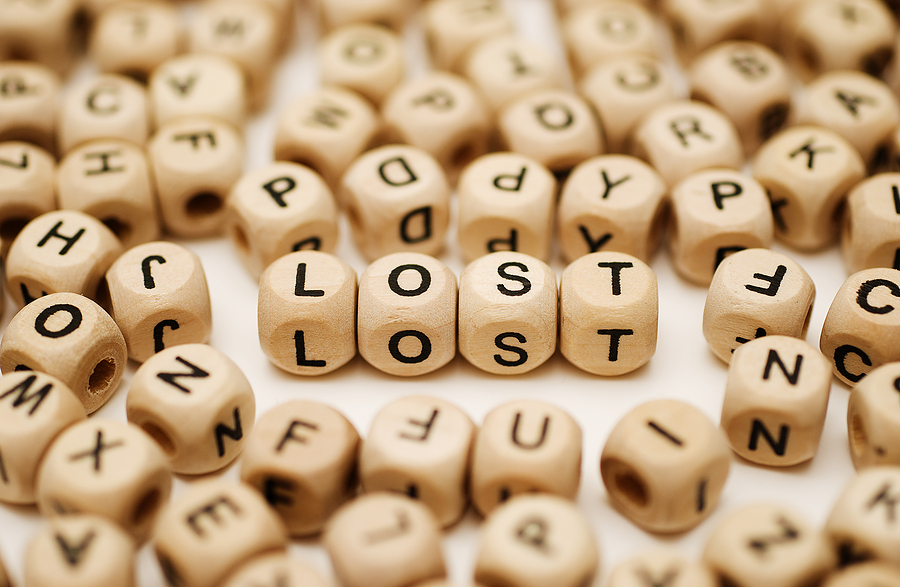
Idiom of the week: Lost for words

Have you ever been lost for words? Oh yes. And who hasn't?

This is the first idiom I learnt at university in my English class. It appeared in a text about how children acquire their mother tongue, and for some reason, it's one of those idioms I've never forgotten. 

Being lost for words means that you're so shocked, surprised or upset that you don't know what to say. It can have both positive and negative connotations, and the equivalent in Spanish would be quedarse sin palabras or sin habla.

So, as I was saying, this idiom has managed to stay in my mind somehow. I wonder if there's a connection with the fact that, in spite of my age, sometimes life and people still make me lost for words every now and then.

viernes, 24 de abril de 2015

Idiom of the week: It ain't over until the fat lady sings

Imagine you're watching a football game. Your team are losing, the situation doesn't seem to get any better, and a friend of yours keeps pestering you on how terribly they're playing. However, you still trust things can change before the end of the match. That's when you tell your dear friend, 'Hey, shut up! It ain't over until the fat lady sings!'

And you're right! We shouldn't anticipate the outcome of a situation before it has finished for good. Things may turn around unexpectedly in the last second.

I think this is a fun idiom, but it needs explaining. Why the fat lady? Why the singing? According to many sources, there exists a stereotype for opera sopranos which depicts most of them (if not all) as being irreverently overweight. Some of these sopranos perform their solo by the end of the show, and some even sing the very last line of the whole opera.

So, both literally and figuratively, the show's definitely not over until the fat lady sings.


viernes, 17 de abril de 2015

Idiom of the week: On pins and needles

"Pins and needles" is a tingling, itching sensation that happens when the blood supply to a given area of the body (usually a limb) is cut off temporarily. We've all had it at some point in our life. The medical name for pins and needles is "paraesthesia", but it's commonly known as a limb "falling asleep".

Furthermore, on pins and needles may refer to a state of anxiety or nervousness, as in 'I've been on pins and needles all day, waiting for you to call.' In Spanish, we've got the equivalent expression 'estar en ascuas' -and if this isn't idiomatic, I don't know what is! 


martes, 24 de marzo de 2015

Idiom of the week: In the blink of an eye

Ah, high time for an easy one!

"In the blink of an eye" refers to a very short period of time, an instant. There is an alike expression in Spanish -"en un abrir y cerrar de ojos". Funny how it takes longer to say the idiom than what it actually implies, isn't it?

This week's idiom has been introduced in the blink of an eye. Phew, task accomplished!


domingo, 15 de marzo de 2015

Idiom of the week: In a nutshell

Do you like nuts? I do! There are dozens of them, from the popular almonds to the exotic macadamia nuts. You can have them raw, salted, sugar-coated, fried... And the best thing about them is they're packed with vitamins, minerals and healthy fat.

Today's idiom is a little tribute to nuts. The nutshell is the outter and harder part of the nut, which you don't usually eat. When you crack a nut, what can be put into the remaining shells? Not much, since most nuts are tiny. Then, if you hear someone say 'in a nutshell', expect just a few words afterwards. This expression is used to rephrase things simply and concisely at the end of an essay or speech. It's an equivalent of the better-known 'to sum up' or 'briefly' which you've probably studied at school, e.g.: 'in a nutshell, the film wasn't as good as the book'.

The idiom can also be used to present a topic in a straightforward, easy way, and it usually appears in titles or headings, e.g.: 'Benefits of swimming in a nutshell'.

By the way, did you know that peanuts, in spite of their deceiving name, aren't nuts, but legumes?


viernes, 6 de marzo de 2015

Idiom of the week: That's the way the cookie crumbles

"That's the way the cookie crumbles". I always think of a chubby, cute hamster nibbling at a cookie whenever I hear this expression.

The meaning it conveys isn't that fun though. "That's the way the cookie crumbles" (also "that's the way the ball bounces") is used to show resignation when something doesn't come out as expected and there's nothing you can do to change it.

We've got some equivalent expressions in Spanish (así es la vida; es lo que hay), but I don't think there's one as idiomatic as "that's the way..." -except perhaps the more vulgar ajo y agua which has become popular among young people nowadays. 

For a chic version, you can rely on the French c'est la vie. The meaning is exactly the same, but you won't probably sound so rude.


viernes, 27 de febrero de 2015

Idiom of the week: Dine and dash

A couple of days ago, one of my students asked me how to say "hacer un simpa" in English. I had to admit I didn't know (which of course bothered me!), so after the class I went straight away to a computer to find out. God bless google.

In English, "hacer un simpa" is generally known as dine and dash (literally, "eat and run away"), but it's not the only expression available. I was surprised to learn there are lots of synonyms, for example, "dine and ditch", "do a runner", or "chew and screw" (source: wikipedia). I found the last one particularly funny -and this means I won't probably forget it!

It was nice to learn a new idiom thanks to a student's curiosity for a change. 


jueves, 19 de febrero de 2015

Idiom of the week: By heart

Do you ever study by heart? Do you know your friends' phone numbers by heart

Confused? No wonder. This idiom is tricky. Strange as it may sound, it has nothing to do with love -not even with liking something.

When you know something by heart, it means you know or have memorized it perfectly. But why is this ability attributed to the heart and not to the brain? Apparently, the ancient Greeks believed that the heart, being the most important organ in the human body, was were intelligence and memory were placed. It was a long time before scientists realized that the heart had nothing to do with the ability to learn or remember -but oh dear! Too late. The idea had already left an imprint on language. 


sábado, 7 de febrero de 2015

Idiom of the week: Heads or tails?

You've used this expression a hundred times: heads or tails? It's what you say when you toss a coin in the air to resolve a dispute. 

We all know what a "head" is, but what about a "tail"? It's the rear part of an animal. Dogs usually wag their tails to convey happiness, and pigs have curly, funny tails. So, "heads or tails" brings two opposite parts of the body together, and by choosing one, you're rejecting the other. After that... It's all up to luck.

In Spanish, we have the expression "cara o cruz". The origin of our own version is a bit longer to tell. Maybe next week?


lunes, 19 de enero de 2015

Idiom of the week: To ace a test

After this long break, I'm back -and so is life to this blog.

I wanted to re-open this section with a positive idiom, and hence "to ace a test" came to my mind. 

"To ace" means that you can do something very well, that you excel at it. So when you study hard, chances are you will ace a test -and be able to relax and focus on something else, which is always nice.

I found two theories regarding the origin of this idiom. On the one hand, the word "ace" refers to the most valuable cards in poker: the four aces of hearts, diamonds, clubs and spades. On the other hand, some people rely on the phonetic ressemblance between "ace" and "A", which is the highest mark you can get in an exam.

I hope you ace as many tests as possible. You'll be proud of yourself!


martes, 14 de enero de 2014

Idiom of the week: To be in the spotlight

Some people enjoy it, others dread it. Sometimes we deliberately pursue it, but sometimes we just happen to be there and can't escape from it. What about you? Do you enjoy being in the spotlight?

According to www.wordreference.com/, a spotlight (/ˈspɒtˌlaɪt/) is 'a powerful light focused so as to illuminate a small area, usually mounted so that it can be directed at will'. 

With this definition in mind, it's easy to guess that, if you are in the spotlight, you're getting everyone's attention. How does that sound? Are you the kind who loves it or hates it?

Apart from people, things can be in the spotlight too -objects, discussion topics, arguments, news, quotes... Probably, this idiom is the older brother of Twitter's "trending topic". 


miércoles, 8 de enero de 2014

Idiom of the week: To go Dutch

This is another 'oldie', at least for me. I've just discovered where it comes from though -and it's clever!

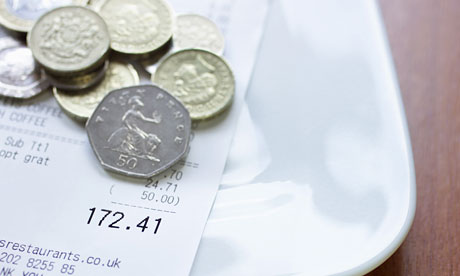
"To go Dutch" means that, when you are with a group of people, each person pays for their own expenses. It's particularly useful when it comes to a restaurant bill, and it can be interpreted in two different ways: either you only pay for what you've had, or the bill is split evenly among all the people in the group. We've got equivalents in Spanish for both: "ir a escote" or "ir a pachas".

Now, what's even more interesting: the origin of the idiom "to go Dutch" goes back to the concept of a Dutch door -a door divided horizontally in two equal halves. Can't picture it? Think of the classical stable door: the lower half remains closed (so that animals can't get out) while the upper half is open (to allow light and fresh air inside, for example). To me, it's a brilliant metaphor of equal sharing.

For the record, let me tell you that going Dutch is very common in the UK and other countries in Northern Europe, and it's not seen as an act of stinginess or lack of generosity.


miércoles, 25 de diciembre de 2013

Idiom of the week: To take the gilt off the gingerbread

Our idiom today is also related to Christmas: what does it mean to take the gilt off the gingerbread?


As you know, gingerbread is a spiced cake or biscuit. It's usually cut into a human shape -hence the gingerbread man you've probably seen in books and films. Back in the Middle Ages and Elizabethan times, these biscuits were covered with gilt (a gold coating) which could be real or -more frequently- artificial. 

What happens when you scratch away the surface of something showy? You're depriving it from its beauty, spoiling something that seemed truly valuable -and probably discovering its true (and more modest) nature. You're taking the gilt off the gingerbread.

Be careful with the misspelling 'take the guilt off the gingerbread'. The cookie might look like a little human, but it has committed no crime other than tasting heavenly.


lunes, 16 de diciembre de 2013

Idiom of the week: Like turkeys voting for Christmas

The Christmas holidays are just around the corner, so I've chosen a seasonal idiom: like turkeys voting for (an early) Christmas.

The meaning, however, isn't that merry. Actually, this idiom is a comparison used to express irony. Would a turkey really vote for Christmas? Isn't that suicidal? Doesn't the poor animal know that, by Christmas, its juicy body will probably be roasting in an oven? 

When people behave like turkeys voting for Christmas, they are making a choice, or accepting a situation, that will eventually have bad consequences for them. For example, if you're a teacher and agree to a larger number of students in class, or if you're a taxi driver and agree to a rise in the price of gas, you're like turkeys voting for Christmas.

The American version is very graphic too: like turkeys voting for Thanksgiving. As you know, Thanksgiving is just as relevant as Christmas in the US (and depending on the area, even more relevant than Christmas itself). And people eat turkey on that day as well!


viernes, 29 de noviembre de 2013

Idiom of the week: a silver surfer

What is a silver surfer? Or rather, who is a silver surfer?


This idiom is relatively new and informal, and it comes from the also oh-so-fun idiom 'surf the internet'. How this concept was born is unclear, but I get the feeling there's a metaphorical connection between the fact that surfing through waves in the ocean is similar to browsing through websites.

This said, by now you've probably guessed that a silver surfer is someone who does something on the internet. And you're right: a silver surfer is an older, especially retired, person who uses the internet. Why silver? The pun is an allusion to the typical grey colour of an older person's hair -unless he or she has had it dyed, of course.

I've been trying to find an equivalent idiom, but I only found lousy literal translations: "estela plateada" por Peninsular Spanish and "surfista de plata" or "deslizador plateado" for American Spanish. I seriously doubt the average speaker knows what these expressions refer to.

Perhaps we don't have enough silver surfers around here yet... However, you'd be amazed at the increasing amount of silver surfers in English-speaking countries nowadays. More power to them!


miércoles, 20 de noviembre de 2013

Idiom of the week: The early bird catches the worm

Do you often feel lazy in the morning? Is waking up (and not only breaking up) hard to do? Then perhaps it's a good idea to stick a post-it on your fridge, or even on your bedside lamp, bearing this proverb: 'The early bird catches the worm'.

You might not feel precisely like a bird at 7 am, and worms don't make such an attractive breakfast for us delicate human beings... But keep in mind that lazyness won't take you far. Just the opposite: lazyness is likely to drag you into more lazyness. If you wake up and get to work (or school) early, you'll make a good impression on everyone, you'll feel more energetic sooner, and in the long run you'll succeed because you'll have plenty of time for all the things you have to do throughout the day. Just like the bird finds motivation in being the first to see and catch the fattest, slimiest worm, find a reason to motivate yourself... And off you go!


jueves, 14 de noviembre de 2013

Idiom of the week: A sweet tooth

Sorry it's taken me a while to come back with new idioms. It's getting hectic at work!

Today's idiom is dedicated to those who love candy and sweet things in general. Those people are said to have a sweet tooth. 

According to some sources, the expression goes back as far as the Middle Ages, and it's present in writings from as early as the 1600s. At the beginning it only referred to a liking for delicacies and exotic food in general, but its meaning has become more limited nowadays. You may see it expressed in plural too (to have sweet teeth). I don't think we have an equivalent in Spanish -can you think of one?

The origin of this idiom isn't clear, but perhaps it comes from the toothache you can get after eating too many sweets. So if you have a sweet tooth, enjoy whatever you're eating (that's the key idea!) but be careful not to overload your system with sugar.


domingo, 27 de octubre de 2013

Idiom of the week: A bun in the oven

Don't you love it when you're baking a bun in the oven and your whole house smells like paradise?

However, if you ever hear someone say, 'Mary's got a bun in the oven', don't expect an invitation for a bite of something spongy. Chances are you're being told that Mary's having a baby some time soon!

English is loaded with euphemisms for "pregnancy": "in the pudding club" (old-fashioned), "in a delicate condition" (polite), "on stork watch" (funny), "up the duff" (informal)... I chose "to have a bun in the oven" because it struck me as the kindest of all, and probably the easiest to remember. 

The origin of this idiom is uncertain, but it doesn't take a big stretch of the imagination to decipher it. After all, there's a clear parallelism between a woman's womb and an oven, and between a baby and a bun. And who can resist a freshly-made bun? Who can resist an adorable baby? The fact that the idiom has been used in movies, books and TV shows for ages now has contributed to its massive popularization 

So, remember, if you find out your best friend's got a bun in the oven, don't ask her to save some in a tupperware for you... Say "congratulations"!


lunes, 14 de octubre de 2013

Idiom of the week: Once in a blue moon

Certain things only happen once in a blue moon

What does that mean? Well, "a blue moon" is the second full moon in a calendar month (in Spanish, we call it "segunda luna llena"). If you grab a calendar and have a look at it, you will see that, as a rule, in each month there is a full moon, a waxing moon, a new moon, and a waning moon. As you may be guessing, a second full moon is rather unusual -and hence the explanation for this idiom: when something happens once in a blue moon, it happens rarely.

Surprised? Don't be. It's a rare but not impossible phenomenon. In fact, a blue moon happens every 2 to 3 years. For a blue moon to take place, the first full moon must occur at the beginning of the month, usually on day 1 or 2. Therefore, the second full moon will occur right at the end of said month, usually on day 30 or 31.

Check these links for the last blue moon (in August 2012) and the next (in July 2015):

Now, what about the colour? Can a moon actually look blue? Yes, it can -as a result of volcanic eruptions or fires, for example. How come? This effect can be caused by huge amounts of smoke and dust particles in the air. In fact, after the Krakatoa erupted late in the 19th century, the moon is said to have had a bluish tinge to it for months! 

The choice of the color blue isn't just coincidental. Fortunately, we ony get volcanic eruptions and big fires once in a blue moon.

I still marvel at how language unravels itself...


viernes, 4 de octubre de 2013

Idiom of the week: A bookworm

Are you a bookworm? It may sound nasty, but if you enjoy reading, then yes -you're definitely a bookworm

We call someone a bookworm when they spend hours devouring books, probably as a reference to real bookworms (=insects), which delight in eating and settling in books. It's not like that happens very often nowadays thanks to the new materials books are made of, but insects, humidity, rodents or extreme temperatures used to be a dramatic threat in libraries not so long ago. In fact, the equivalent idiom in Spanish for "bookworm" is "ratón / rata de biblioteca" for the very same reason.

Being called a bookworm (or a mouse / rat) doesn't probably sound like the nicest compliment on Earth, but in these crazy days of computers, tablets, iPhones and other hi-tech stuff, I do feel a twinge of fondness whenever I see someone holding an old, good book in the train or by the seaside.

"You're the same today as you'll be in five years, 
except for the people you meet and the books you read."
(Charlie "Tremendous" Jones)